
The regulatory framework for grants to renovate housing underwent structural changes in 2024, with direct repercussions on the financial setup of projects. Understanding the relationship between MaPrimeRénov’, energy savings certificates, and complementary schemes is crucial for the profitability of energy renovations.
Exclusion of gas in large-scale renovations of individual homes
Recent texts exclude gas heating from the scope of large-scale renovations financed by MaPrimeRénov’ in individual homes. This direction alters the work strategy for homeowners equipped with gas boilers, who must now consider switching to heat pumps, district heating, or solar thermal systems to remain eligible for the supported pathway.
In practice, we observe that this exclusion pushes project owners to rethink their HVAC lot from the design phase. A project that planned to install a high-performance gas condensing boiler can no longer include this equipment in the subsidizable base of the MaPrimeRénov’ supported pathway.
Those wishing to compare the available schemes according to their situation can rely on the Building Grants Guide to identify the pathways compatible with their renovation project.
Prohibition on renting thermal sieves and cumulative aid
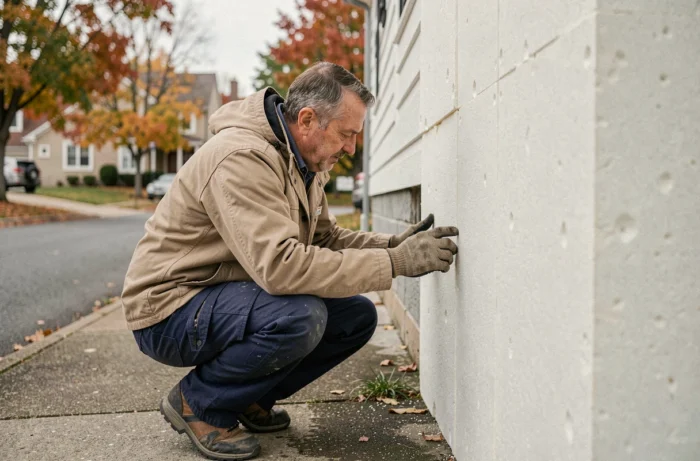
Since January 1, 2025, homes classified G in the energy performance diagnosis (DPE) can no longer be rented as a primary residence in mainland France. Class F will follow in 2028, and class E in 2034. This regulatory constraint transforms renovation grants into a nearly mandatory lever for landlords.
The combination of MaPrimeRénov’ + eco-PTZ + CEE + 5.5% VAT becomes the standard setup to achieve the necessary class upgrade for re-rental. Without this combination, the remaining cost often exceeds the threshold for rental profitability over ten years.
The distinction between owner-occupiers and landlords affects the financing caps. A landlord must document the DPE label before work and prove the class gain after intervention to unlock the aid tranches. The prohibition timeline creates increasing pressure on RGE craftsmen, with project timelines extending as deadlines approach.
MaPrimeRénov’ gesture pathway: removal of mandatory DPE
The government has lifted the requirement to provide an energy performance diagnosis for MaPrimeRénov’ gesture pathway applications in mainland France. This measure simplifies access to aid for targeted work: insulation, window replacement, installation of high-performance heating equipment.
We recommend obtaining a DPE nonetheless. The absence of an initial diagnosis complicates the demonstration of energy gain, which can be problematic if the owner later wishes to switch to the supported pathway or justify a rental increase.
Packages for heat pumps have been increased in 2024. This increase partially offsets the installation cost compared to a gas boiler, but the remaining cost heavily depends on the applicant’s income category.
Financing renovation work: linking CEE and MaPrimeRénov’

Energy savings certificates remain cumulative with MaPrimeRénov’, but their valuation varies according to the chosen obligated party and the type of work. Comparing CEE offers before signing a quote can represent several hundred euros of difference on the same insulation project.
Some points of caution regarding the financial setup:
- The payment of CEE occurs after the completion of the work, which requires sufficient cash flow or bank pre-financing
- The eco-zero-interest loan finances the remaining cost without income conditions, up to a ceiling that depends on the number of actions taken
- The 5.5% VAT applies to labor and materials for energy improvement work, reducing the overall cost even before calculating the grants
- Local authority aids (regions, departments, intercommunalities) complement but their eligibility criteria vary greatly from one territory to another
My Renov’ Accompanist: obligation and actual cost
Using My Renov’ Accompanist has become mandatory for the supported pathway. This accredited trusted third party conducts the energy audit, proposes a work scenario, and monitors the project until completion. Their intervention conditions the payment of MaPrimeRénov’ supported pathway.
The cost of the accompaniment is partially covered by Anah, but the remaining cost for the owner depends on their income category. For households with intermediate incomes, this service represents a budget item to be included from the initial project estimate.
A prior appointment with a France Rénov’ advisor is also mandatory before submitting the application. This first free exchange allows for calibrating the project and obtaining the list of accredited Renov’ Accompanists in the relevant area.
The grant system for renovating a home in 2024 relies on a layering of mechanisms whose effectiveness depends on their coordination. A poorly sequenced setup can lead to the loss of aid: signing a quote before the validation of the MaPrimeRénov’ application, for example, invalidates the request. Checking each administrative prerequisite before committing to the work remains the most cost-effective precaution of the project.