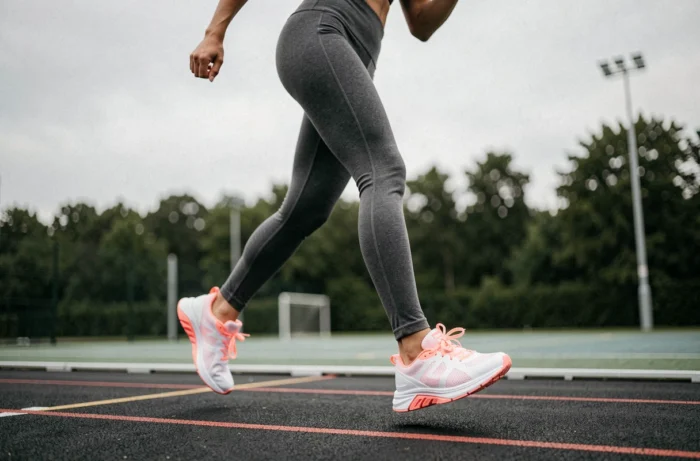
The women’s fitness sneaker market increasingly prioritizes cushioning as a central criterion. This trend, driven by the movement towards bulky soles from running shoes, now affects models designed for the gym. A recent clinical study conducted on recreational runners associates a high perception of heel cushioning with a significantly reduced risk of injury.
This ranking is based on each model’s ability to combine shock absorption, lateral stability, and foot support during varied sessions.
1. HOKA Bondi 9: maximum cushioning for gym cardio
The Bondi 9 represents the high end of the cushioning spectrum. Its midsole, among the thickest in the women’s fitness segment, absorbs the repeated impacts from the treadmill, stepper, and prolonged cardio sequences.
Practitioners who accumulate sessions with a strong vertical impact find immediate comfort. However, the thickness of the platform has a downside: the ground contact sensation significantly decreases. For strength exercises requiring a stable base, user feedback diverges on this point. Some users tolerate the softness well during light squats, while others find the sole height incompatible with strength movements.
2. Nike Free Metcon 7: versatile women’s fitness sneaker with balanced cushioning
The Free Metcon 7 seeks a compromise between two Nike lines with opposing philosophies. The forefoot retains the flexibility inherited from the Free line, while the heel offers a firmer base designed for lifting.
Among the most cited women’s fitness sneakers with cushioning, this model transitions from HIIT to light weightlifting without changing shoes. The cushioning remains moderate compared to a Bondi 9. However, the flat heel sole provides a lateral stability absent in purely running models.
3. Nike Vomero 18: generous cushioning for treadmill sessions
The Vomero 18 is a running model that some practitioners repurpose for gym fitness, primarily for the treadmill. Its midsole offers generous cushioning and a noticeable energy return during long sessions.
Beyond thirty minutes at a moderate pace, comfort remains consistent. Once the session shifts to floor exercises or quick lateral movements, the model loses relevance. It is a shoe focused on impact comfort rather than versatility.
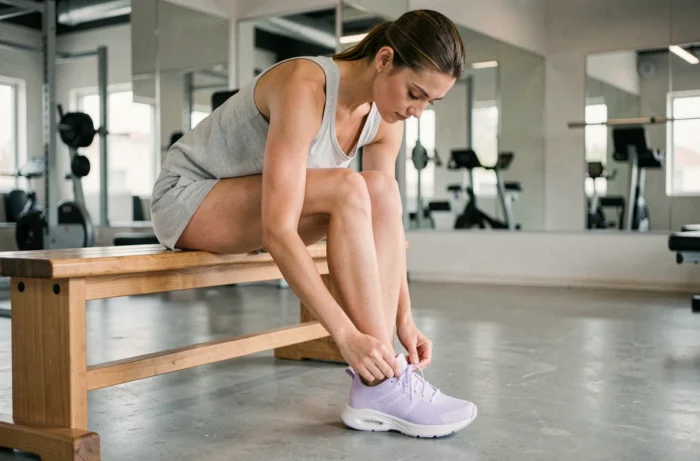
4. Reebok Nano X5: CrossFit reference adapted for women’s fitness
The Nano X5 continues to establish itself among practitioners who alternate between strength training and metabolic circuits. Its flat and wide sole provides a solid base under the bar. The integrated Floatride Energy foam adds sufficient cushioning to absorb box jumps and burpees.
The emphasis is on firmness. The cushioning exists but remains contained, calibrated not to destabilize during lifts. Practitioners seeking softness will be disappointed. However, those wanting functional cushioning without sacrificing stability find a rare balance in the market.
5. On Cloudtilt: daily comfort and light sessions
Upon slipping on, the Cloudtilt from On provides a soft and enveloping sensation. Its CloudTec construction adequately absorbs shocks during walking or low-intensity cardio. It also serves as a shoe for commuting to the gym.
This positioning limits it as intensity increases. The sole, designed for linear comfort, lacks lateral rigidity during quick direction changes. For stretching classes or calm sessions, the choice is justified. For HIIT, it is not.
6. Adidas Adizero EVO SL: lightness and dynamism for cardio
The Adizero EVO SL plays the lightweight card. The shoe is responsive during treadmill runs and plyometric exercises. The cushioning is present without being enveloping, oriented towards energy return rather than softness.
Practitioners looking for a snappy shoe for short, explosive sessions will find it suitable. For long sessions or static exercises, the low foam volume can lead to foot fatigue beyond forty-five minutes.
7. Nike Pegasus 42: the versatile running shoe adapted for fitness
The best-selling model from Nike in running, the Pegasus 42 retains the attributes that make it usable in the gym. The React cushioning combined with a Zoom Air unit in the heel provides a good balance between flexibility and rebound.
Its versatility covers cardio, the treadmill, and group classes without excelling in any isolated discipline. For practitioners wanting a single versatile pair, the compromise holds up. However, dedicated models will perform better in each specific niche.
8. Brooks Ghost 16: neutral cushioning for sensitive feet
The Ghost 16 from Brooks targets practitioners looking for neutral cushioning without stride correction. Its DNA Loft foam evenly distributes shock absorption along the length of the foot. The fit, recognized as generous, suits wide or pressure-sensitive feet.
In the gym, it performs well on the treadmill and in moderate cardio. Its outsole, designed for asphalt, wears less quickly on indoor surfaces. For heavy lifting, rigidity is lacking.
9. Skechers Arch Fit: arch support and affordable price
The Arch Fit range from Skechers emphasizes arch support, more pronounced than in most competitors. The price remains significantly lower than that of Nike or HOKA models.
- Marked arch support, suitable for practitioners suffering from plantar fasciitis pain
- Correct cushioning for fast walking and light cardio sessions in the gym
- More discreet aesthetic than technical models, wearable daily
Lateral support remains limited, excluding exercises with quick movements or intense aerobic classes.
10. New Balance FuelCell Trainer: responsiveness and cushioning for metabolic circuits
The FuelCell Trainer combines FuelCell foam, known for its rebound, with a widened base at the heel. This architecture targets metabolic circuits that alternate jumps, short runs, and floor exercises.
- Notable rebound thanks to the FuelCell foam, useful for box jumps and lunge jumps
- Wide base at the heel for better stability during deadlifts or squats
- Breathable mesh that limits heat buildup during long sessions
The current trend towards bulky and ultra-cushioned soles, highlighted by several fashion and sports media for 2025-2026, directly affects these fitness models. Choosing between maximum cushioning and stability for strength remains the main trade-off. The best fitness sneaker with cushioning depends on the type of session practiced, not a universal ranking.