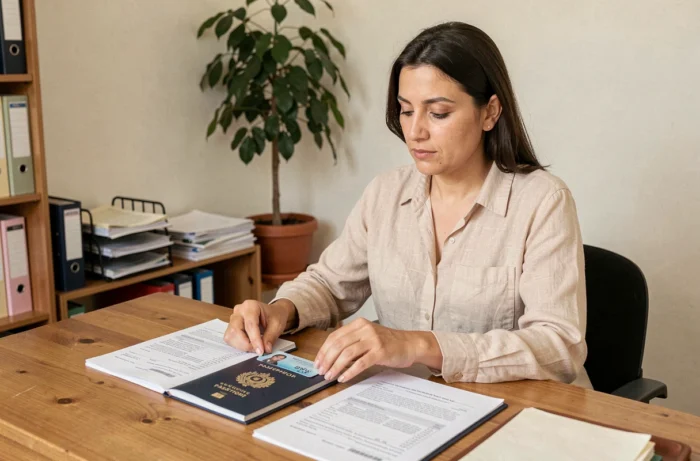
The Tunisian biometric passport remains the only travel document accepted to cross most borders, including for short stays. Preparing for its renewal requires gathering a precise file, the composition of which varies depending on the applicant’s profile (adult, student, minor) and the submission location (Tunisia or consulate abroad). Processing times and access conditions to consular counters add a layer of complexity that the mere list of required documents does not summarize.
Disparities between consular posts: an often underestimated factor
The renewal procedure is theoretically identical everywhere, but field reports indicate significant discrepancies from one consular post to another. Some consulates require additional supporting documents (recent proof of residence, copy of the residence permit of the country of residence), while others strictly limit themselves to the regulatory documents.
These differences are partly explained by the volume of requests handled by each post. The Tunisian consulate general in Paris, for example, manages a much larger flow than other representations in Europe, leading to longer processing times and a stricter appointment policy. Making an appointment online, via the e-Rendez-vous platform, has become a major operational requirement to access the counter.
Before assembling your file, it is useful to consult the documents for renewing the Tunisian passport to check the required documents based on your situation.
Tunisian passport renewal file for an adult
The documentary base for an adult (18 years and older) relies on several documents, none of which are optional. The absence of a single element leads to the rejection of the file at the counter, with no possibility of later completion in most consulates.
- The official passport application form, filled out legibly and signed in the designated box (top left). A form signed in the wrong place is systematically rejected.
- A copy of the Tunisian national identity card, accompanied by the presentation of the original upon submission.
- The old passport, even if expired. In case of loss or theft, a specific declaration is required, and the file shifts to a duplicate procedure, which is longer and more expensive.
- Two color identity photos, white background, size 3.5 x 4.5 cm. Photos with colored backgrounds or in standard French format (3.5 x 4.5 cm but with different framing) are regularly rejected.
- The payment receipt for the fiscal stamp, the amount of which varies depending on the applicant’s profile.
- For applications submitted abroad: a copy of the valid residence card in the country of residence.
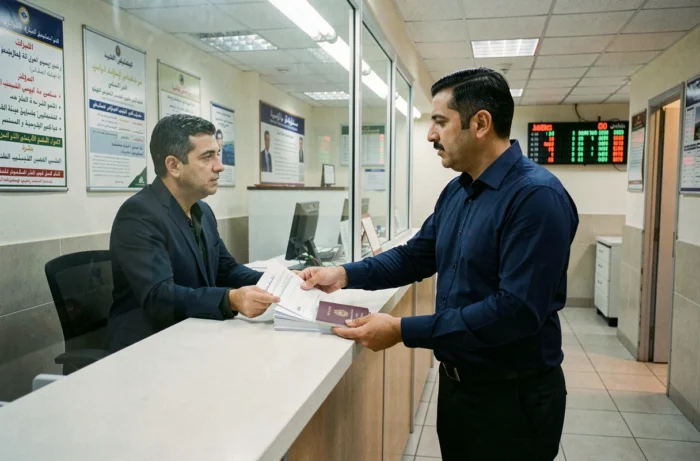
Fiscal stamp: amounts based on profile
The fiscal stamp fee is 20 dinars for students, pupils, and children under 6 years old. For other applicants, the amount is 60 dinars. These rates apply to submissions in Tunisia. Consulates abroad charge additional consular fees, converted into local currency.
Tunisian passport for minors: specific documents
The file for a minor includes the common base (form, photos, old passport) but adds documents specific to the guardianship situation. Errors are most frequent with these documents.
The parental authorization duly filled out, signed, and legalized is the most sensitive document. It must bear the signature of the legal guardian, accompanied by a copy of their national identity card. An authorization that is not legalized, or legalized by an authority not recognized by the Tunisian administration, blocks the application.
A Tunisian birth certificate is required instead of the identity card copy (as the minor does not possess one). For school-aged children, a school attendance certificate is also required. Consulates verify that this certificate covers the current school or academic year.
Case of adult students
Adult students benefit from the reduced fiscal stamp rate but must provide a valid university enrollment certificate for the current session. A certificate from the previous year is not sufficient. This document replaces the school certificate required for minors.
Remote submission and modernization of consular services
The Tunisian government has initiated a digitization project for administrative procedures that directly concerns the passport. According to Webdo (August 2026), remote submission for the passport, identity card, and driver’s license is among the services being prepared. This evolution would profoundly change the procedure for the diaspora, which would no longer be required to physically visit the consulate for every step.
Meanwhile, some Tunisian embassies in Africa and the Middle East have already implemented mobile consular days, bringing the counter closer to communities far from the main posts. Tuniscope reported in September 2026 that the Tunisian embassy in certain countries organized these decentralized sessions with reduced processing times compared to traditional submissions.
Field feedback varies on this point: while some posts have indeed accelerated processing, others continue to show several weeks of delays between submission and the issuance of the new passport. The completeness of the file at the time of submission remains the most determining factor to avoid back-and-forths.
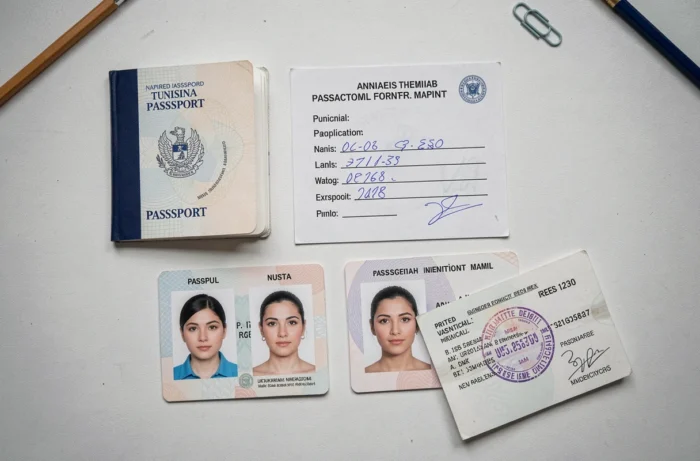
A complete file from the first visit to the counter, with the correct photo dimensions and a properly signed form, avoids the majority of reported rejections. For applications from abroad, checking the specific requirements of the relevant consulate before making an appointment remains the most effective precaution, as long as the remote submission procedure is not yet widespread.