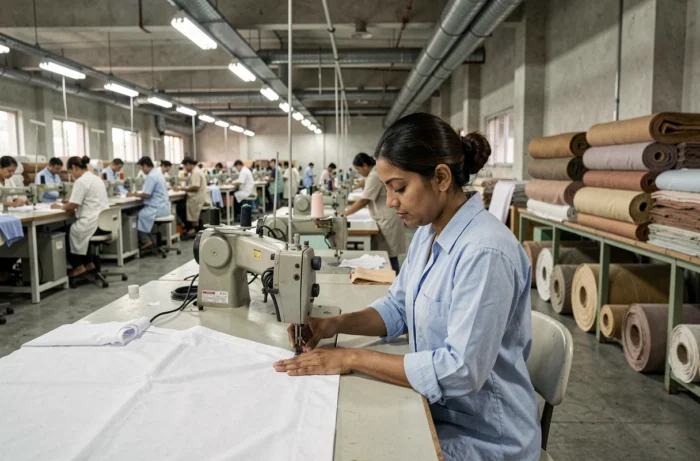
Zara does not own the majority of the workshops that sew its clothes. The Spanish brand, a subsidiary of the Inditex group, relies on a network of subcontractors spread across about fifty countries, with a production logic that varies according to the type of item, the season, and the target market.
Audits and Traceability at Inditex: What Recent Figures Reveal
The issue of traceability sets Inditex apart from several competitors in the fast-fashion sector. Rather than publishing a complete directory of its factories accessible to all, the group shares its list of manufacturers with IndustriALL Global Union, as part of a framework agreement with unions. This choice limits public transparency while allowing oversight by a third-party organization.
In 2025, Inditex reported conducting 10,709 traceability audits, including unannounced visits to production sites. This volume of audits covers direct suppliers as well as some lower-tier subcontractors, where working conditions are the hardest to verify.
To better understand the mapping of Zara manufacturing factories, it is necessary to distinguish three levels: direct contractual suppliers (often industrial groups), the factories they mandate, and the finishing or cascading subcontracting workshops.
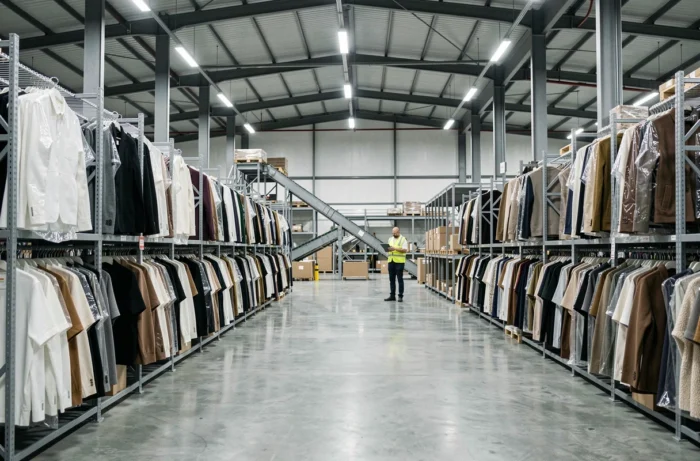
Proximity Production and Asian Production: Two Distinct Logics
Zara divides its manufacturing between two major geographical hubs. The logic that separates them is based on the relationship between speed to market and production cost.
The Proximity Cluster: Spain, Portugal, Morocco, Turkey
Short-cycle items (those that respond to a trend detected a few weeks before going on sale) are manufactured near the Arteixo headquarters in Galicia. Spain and Portugal host factories specialized in cutting, dyeing, and rapid assembly.
Morocco and Turkey complete this cluster. Their geographical proximity to European logistics centers allows for restocking in less than two weeks, compared to several weeks for a maritime shipment from Asia.
The Asian Cluster: China, Bangladesh, Vietnam
Basics (cotton t-shirts, underwear, high-turnover items) are produced in Asia, where labor costs remain significantly lower. China maintains a central role in this setup, followed by Bangladesh and Vietnam.
The difference in lead time between these two clusters explains why two seemingly similar Zara garments can carry different origin labels. A basic pair of pants ordered six months in advance comes from Asia. The same model in a trendy color may come from a Portuguese workshop.
- Proximity cluster: short lead time, higher cost, responsiveness to trends.
- Asian cluster: long lead time, reduced cost, large volumes on basics.
- Site choice: determined by item type and seasonality, not by a single country.
Zara’s Fast-Fashion Model Facing European Regulation
The European Union is gradually strengthening its traceability requirements for textile products sold in its market. New obligations require brands to identify the responsible operator at each stage of the supply chain, including for packaging.
For a group like Inditex, which sells hundreds of millions of pieces per year in Europe, this regulatory evolution requires documenting each logistical link in a traceable manner. The shift from a declarative system to one that is verifiable by authorities changes the game.
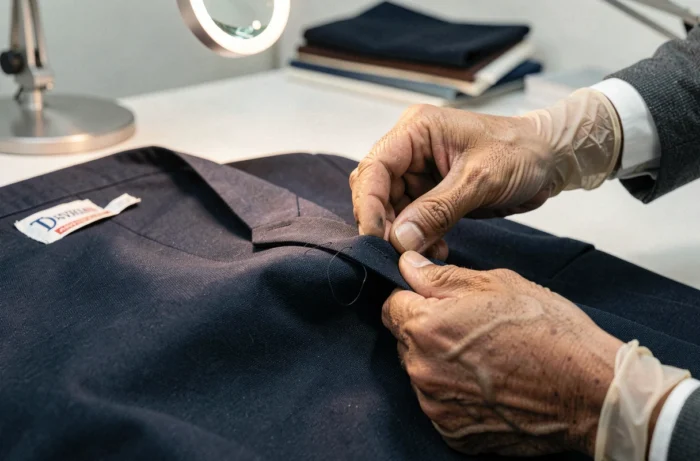
Digital traceability tools are developing in parallel in the textile sector. Some rely on artificial intelligence to cross-reference customs data, audit certificates, and supplier declarations. Inditex has not publicly detailed the technologies chosen, but regulatory pressure is pushing the entire sector toward greater transparency.
Zara Suppliers: What the Labels Don’t Say
The “Made in” label on a Zara garment indicates the country of final assembly. It does not provide information about the origin of the fabric, the source of the cotton, or the dyeing location. A t-shirt assembled in Portugal may contain cotton spun in India, dyed in Turkey, and cut in Spain.
This fragmentation is the norm in the global textile industry, not a specificity of Zara. The difference lies in the volume: with over 1,800 declared suppliers, Inditex manages a supply chain of complexity comparable to that of the automotive industry.
- The “Made in” label only covers assembly, not spinning or dyeing.
- The same garment can pass through three or four countries before arriving in stores.
- The list of direct suppliers does not reflect the actual number of factories involved, due to cascading subcontracting.
Zara’s business model relies on this variable geometric distribution. High-margin, short-cycle items remain close to Europe. Standardized volumes are sent to Asia. Between the two, a centralized logistics system in Galicia redistributes flows to stores worldwide, sometimes twice a week.
The next step for consumers wanting to understand the true origin of a Zara garment does not go through the label sewn into the collar. It goes through the audit data published by Inditex and the increasing requirements of European regulation, which are beginning to make this information less opaque.