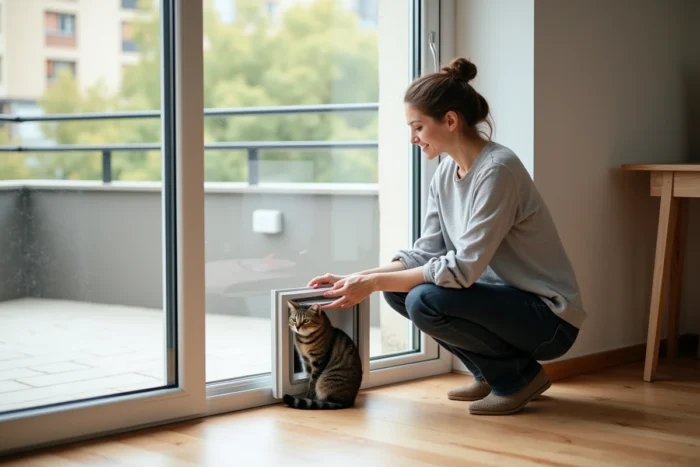
A removable cat flap is a device that is installed on a patio door without cutting or drilling into the existing structure. It usually takes the form of a rigid panel inserted into the rail or frame of the joinery, with an opening adapted to the size of the cat. For a tenant, this technical distinction from a classic cat flap (screwed or cut into the glazing) changes everything: the property remains intact, and the device can be removed upon departure without leaving a trace.
Legal Framework for Removable Cat Flaps in Rentals
Removable devices that do not require cutting or drilling are considered simple everyday equipment, just like a curtain or a portable air conditioner. As long as they do not modify the structure or original glazing, they do not constitute a transformation of the property under the law of July 6, 1989.
In a standard or furnished residential lease, no written permission from the landlord is required to install this type of panel. The condition is simple: installation and removal must be done without leaving a trace. Specifically, if the panel slides into the sliding rail or is fixed by compression in the frame, the tenant remains within their rights.
A detailed guide compares models compatible with this rental constraint, notably the removable panel with cat flap on Oh Brico that distinguishes solutions based on the type of joinery and lease. The nuance to remember: as soon as a screw penetrates the frame or a glazing is replaced, we move into transformation territory, and the owner’s agreement becomes mandatory.
Removable Panel for Sliding Doors: Operation and Limitations
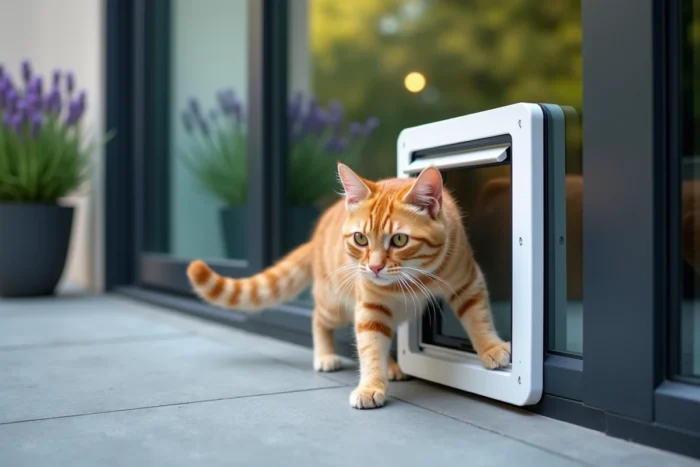
The principle of the removable panel for sliding doors is the most common in rentals. A rigid panel (PVC, polycarbonate, or aluminum) slides vertically into the rail of the sliding leaf. The cat flap is integrated at the correct height. The leaf closes against the panel, and a locking mechanism prevents opening from the outside.
Recent models weigh less than one kilogram and can be inserted without any screws. Their removal takes just a few seconds, making them perfectly suited for rental use.
What the Panel Does Not Solve Alone
Thermal insulation remains a weak point. A simple polycarbonate panel allows more cold to pass through than double glazing. Two criteria help limit heat loss:
- The thickness of the panel: a honeycomb polycarbonate insulates better than a solid sheet of the same thickness, thanks to the air layer trapped between the cells.
- The peripheral seal: a panel delivered without a compression seal creates a thermal bridge along its entire height. Models equipped with EPDM foam or silicone seals offer significantly better airtightness.
- The flap of the cat flap itself: a double flap with a closing magnet limits drafts, whereas a simple swinging flap remains ajar at the slightest wind.
On a standard sliding door, the panel reduces the usable opening width by about ten centimeters. This point should be checked before purchase, especially for narrow doors that also serve as daily passageways.
Microchip Cat Flap or Manual Cat Flap: Which Mechanism for a Rental
The choice of flap mechanism depends less on the rental status than on the environment of the property. Two families of products coexist.
The manual cat flap with magnetic flap works with a magnet attached to the cat’s collar. It partially filters out intrusions from outside animals, remains inexpensive, and requires no electrical power. Its limitation: any cat wearing a magnetic collar (including those from the neighborhood) can open it.
The electronic microchip cat flap reads the subcutaneous identification chip of the cat or a programmed RFID tag. It only allows passage to registered animals. This mechanism consumes batteries (usually four AA batteries, lasting several months) and is significantly more expensive.
Selection Criteria Based on Context
On the ground floor overlooking a shared garden or open space, the microchip cat flap is justified: it blocks stray cats and small wild animals. On an upper floor with a private balcony, the manual cat flap suffices, as the risk of intrusion remains low.
One often overlooked point: the compatibility of the mechanism with the thickness of the removable panel. Electronic cat flaps have a deeper insertion tunnel than manual models. Before placing any order, it is essential to verify that the thickness of the panel corresponds to the adaptation range indicated by the cat flap manufacturer.

Housing Security and Locking the Patio Door
Installing a removable panel in the rail of a sliding door creates an additional access point. Security relies on three complementary elements:
- The rail lock: a bar or block of locking mechanism screwed (or glued) into the rail prevents the leaf from being forced from the outside. Some panels incorporate this system, while others do not.
- The size of the flap: a standard cat flap measures about 15 cm on each side, which excludes the passage of an adult arm up to the interior handle. XL models designed for large cats or small dogs widen this opening and require increased vigilance.
- The locking of the cat flap itself: an integrated latch allows the flap to be secured at night or during prolonged absences, eliminating any drafts and the possibility of animal intrusion.
A panel without a rail lock compromises home insurance if a break-in occurs through this point. It is better to choose a model that comes with its locking system or to add a security bar compatible with the existing rail.
Dimensions and Cat Size: Measure Before Ordering
The size of the flap must correspond to the shoulder width and height at the withers of the cat, with a margin of two to three centimeters. A passage that is too narrow discourages the animal, while a passage that is too wide degrades insulation and security.
The height of installation also matters. The bottom edge of the flap should be at the height of the cat’s belly, not its paws. If too low, the panel loses structural rigidity. If too high, the cat hesitates or forces its way through by jumping, which prematurely wears out the flap.
For an adult cat of standard size, manufacturers recommend an opening of about 15 by 15 centimeters. Large breeds (Maine Coon, Norwegian) require wider flaps, often classified as size L or XL. Measuring the cat remains more reliable than relying on breed: two Maine Coons of the same age can have very different builds.
The last point to anticipate concerns the return of the property. Keeping the original glazing or joinery panel in a dry place allows it to be reinstalled upon departure. This simple reflex avoids any deductions from the security deposit and neatly closes the rental chapter.