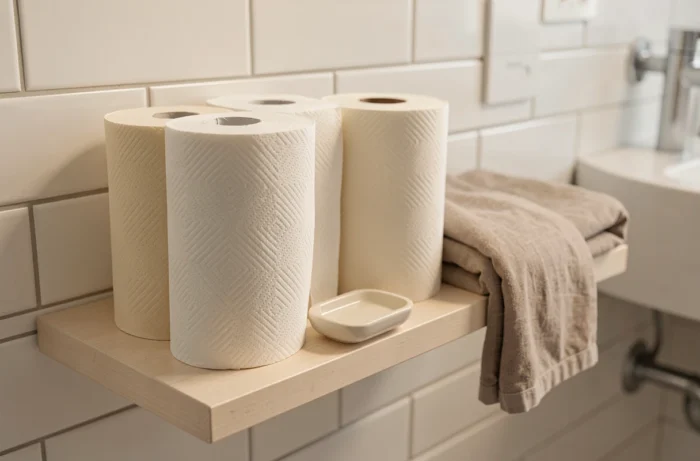
A roll that pills on the first use, paper so thin that you use half a dozen sheets each time, a dissolution that is too slow and ends up clogging the septic tank: we have all experienced at least one of these scenarios. Quality toilet paper is judged by concrete, measurable criteria in daily use, and not just by the promise printed on the packaging.
Thickness and weight of toilet paper: what really changes in use
When you grab a roll from the shelf, the first instinct is to feel the thickness. Two-ply, three-ply, sometimes even four: the difference is not just in the touch. A thicker paper reduces the number of sheets used per use, which partially compensates for its higher unit price.
The weight is rarely displayed on the package. However, it can be quickly recognized: a paper with a sufficiently dense weight does not tear under pressure and does not leave fibrous residue on the skin. In contrast, a very light roll may give the impression of a good quantity/price ratio, but you end up using much more.
For sensitive skin, a minimum of three plies helps avoid repeated friction. Feedback varies on this point depending on the brands, but the correlation between thickness and skin comfort remains the most reliable criterion to test for yourself. If you are looking to compare different ranges of toilet paper and hygiene products, specialized catalogs like risi.fr allow you to browse the references available on the market.
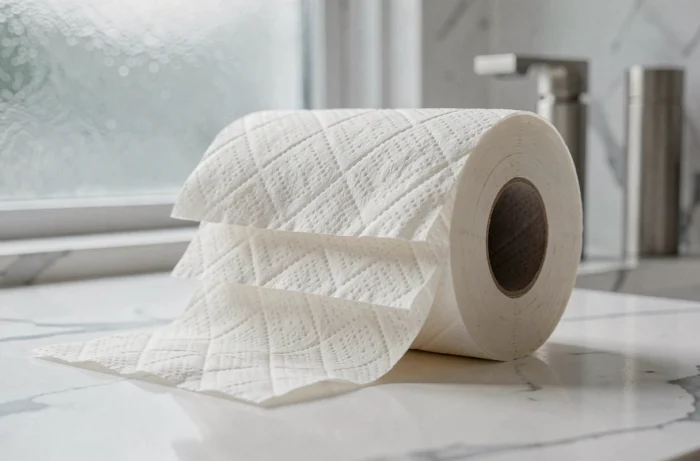
Recycled paper or pure cellulose pulp: a choice that goes beyond comfort
The majority of toilet papers sold in supermarkets are made from pure cellulose pulp, derived from virgin wood fibers. The result is a white, soft paper that feels pleasant to the touch. Recycled paper, on the other hand, uses already processed fibers, which reduces pressure on forest resources.
It is often said that recycled paper is rough or grayish. In practice, recent ranges of recycled paper have improved. Their softness is approaching that of cellulose pulp, although a slight gap remains with the budget options.
Identifying truly eco-friendly paper
The European Ecolabel remains, in 2026, one of the few solid benchmarks for evaluating toilet paper. This official certification covers the entire life cycle of the product, from raw material to packaging. It is not just a marketing argument, unlike vague mentions like “eco” or “natural” found on some packages.
The European directive 2024/825 (EmpCo) has also tightened the rules. Ecological claims without verifiable proof are now regulated. In practical terms, an official label with a license number is better than a green slogan on a pastel package. Before purchasing, you can check for the presence of the Ecolabel logo and its number directly on the roll or on the plastic film.
Compatibility with plumbing and septic tanks
Quality toilet paper is not limited to skin comfort. Its ability to disintegrate in water determines whether it will cause plumbing problems, which can sometimes be costly to resolve.
- Septic tanks require paper that dissolves quickly. A roll that is too thick or treated with moisture-resistant agents can form clogs in the tank.
- Macers, equipped with grinding mechanisms, do not tolerate very dense papers or thick wet sheets well. A compact format, with two plies, remains the safest choice for these installations.
- Dry toilets work differently: the paper goes into the compost. A non-chlorine bleached and fragrance-free paper decomposes better in this context.
A simple test can verify dissolution: dip a sheet into a glass of water and observe its disintegration after a few minutes. Good paper starts to disintegrate in less than a minute. If the sheet remains intact, it’s better to switch brands.
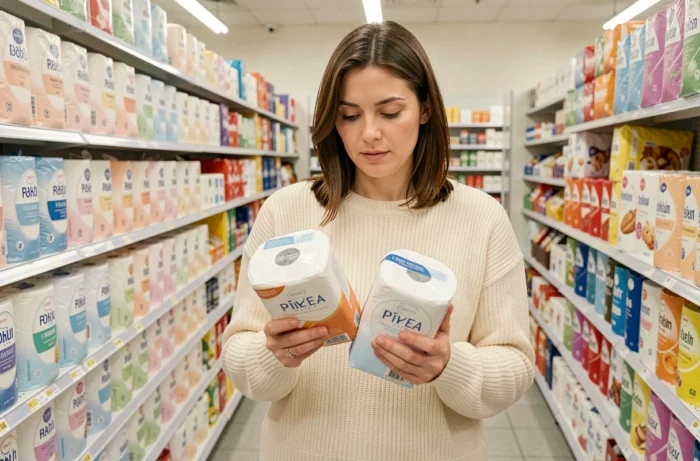
Roll formats and number of sheets: reading beyond the packaging
Manufacturers compete in creativity on packaging. “Mega” rolls, “double length,” “ultra compact”: these names do not adhere to any common standards. A roll sold as “equivalent to two standard rolls” does not necessarily contain twice as many usable sheets.
The real indicator is the number of sheets per roll combined with the number of plies. A three-ply roll with few sheets runs out quickly. A two-ply roll with many sheets lasts longer, but comfort decreases.
Comparing the real cost between formats
To compare objectively, divide the price of the package by the total number of sheets. This calculation often reveals that large packages are not always the most economical. “Premium” formats in small packages display a high price per roll, but their superior thickness sometimes compensates with lower consumption.
The jumbo format, very common in collective restrooms, does not have its place in standard domestic use. Its diameter requires a dedicated dispenser. However, for a guesthouse or a professional space, it represents a significant time-saving in replacement.
- Domestic use: standard rolls of two or three plies, packaged in lots.
- Collective or professional use: jumbo or mini jumbo format, with an appropriate dispenser.
- Dry toilets or camping: compact rolls, unscented, with rapid dissolution.
Quality toilet paper is ultimately recognized by three things: it does not pill, it dissolves properly, and it does not encourage overconsumption. Rather than randomly trying different options, checking the actual thickness, the Ecolabel certification, and compatibility with your installation remains the most direct method for making a sustainable choice.