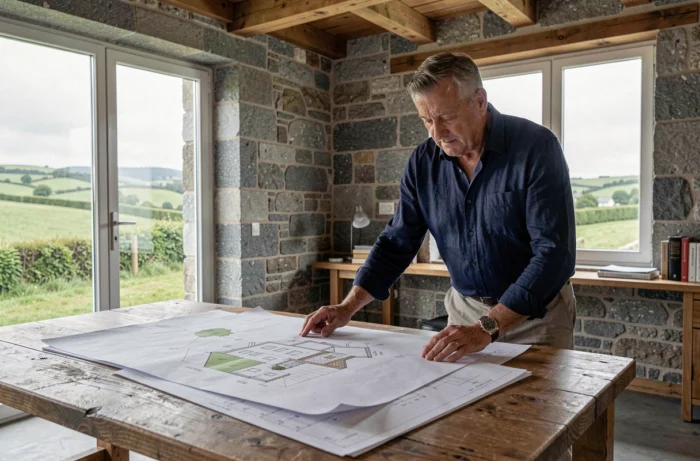
Responsible real estate refers to a set of construction, renovation, and building management practices aimed at reducing environmental impact while meeting the needs of occupants. In Brittany, this approach takes on a particular significance: the existing buildings are already deemed unsuitable for periods of extreme heat, according to an article by Reporterre published in August 2026. The region must deal with real constraints that make the transition of the real estate stock more urgent than elsewhere.
Carbon thresholds RE2025 and new construction in Brittany
Since January 1, 2025, the so-called “RE2025” threshold of environmental regulation imposes a reduction in carbon construction thresholds of about 12 to 17% compared to 2022. This tightening particularly affects individual houses, a very common format in the Breton real estate stock.
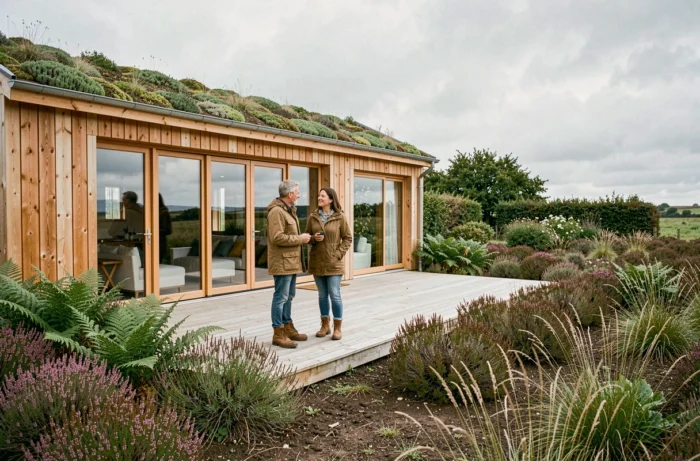
In concrete terms, traditional constructions in concrete blocks or poured concrete lose their regulatory competitiveness. Low-carbon projects (wood frame, bio-sourced materials such as hemp or cellulose wadding) become easier to certify and gain a tangible advantage in the market.
For project holders in Brittany, exploring responsible real estate with Breizh Equitable allows them to identify properties and processes already aligned with these regulatory requirements.
This evolution is not a matter of militant choice: it reflects a legal framework that financially penalizes constructions with a high carbon footprint. A developer who does not comply with the thresholds simply cannot obtain a compliant building permit.
Coastal erosion and property values on the Breton coast
The Breton coastline concentrates a significant share of regional real estate attractiveness, from Morbihan to Côtes-d’Armor. The Climate and Resilience Law has introduced obligations that directly modify the way these properties are sold.
Since 2023, any sales announcement in a municipality classified as “exposed to coastal erosion” must mention this risk. The risk assessment must be provided to the buyer as soon as negotiations begin, not just at the signing. The affected municipalities are also subject to new preemption rights for the benefit of local authorities.
For an investor, these rules change the long-term rental profitability calculation. A property located in an exposed area may see its liquidity potentially reduced if information about the erosion risk deters buyers. Conversely, a property built set back from the coastline, with sustainable materials and high energy performance, retains its value better.
- Check if the municipality is on the official list of areas exposed to coastal erosion before any purchase.
- Request the risk assessment at the beginning of discussions with the seller, not at the time of the compromise.
- Prefer properties whose design incorporates adaptation to climate change (natural ventilation, enhanced insulation, bioclimatic orientation).
Breton buildings and climate adaptation: beyond insulation
Brittany has long been considered a temperate region where heat was not an issue. Recent heatwaves have shown that the Breton real estate stock is not designed to handle temperatures exceeding 35 °C. Older homes, often poorly ventilated and lacking solar protections, become uncomfortable or even dangerous for vulnerable occupants.
Responsible real estate in Brittany therefore does not just mean reducing heating consumption. It also includes summer comfort: air circulators, solar shades on south-facing facades, ventilated roofs, greening of surroundings. These elements, once reserved for southern regions, are now part of the specifications for a high-performance home in Brittany.
The renovation of existing buildings poses a specific challenge. Granite houses, typical of the region, offer interesting thermal inertia but require targeted interventions to improve ventilation without degrading the envelope. A responsible renovation preserves the qualities of the old building while correcting its climatic weaknesses.
Responsible rental investment in Brittany: what changes for owners
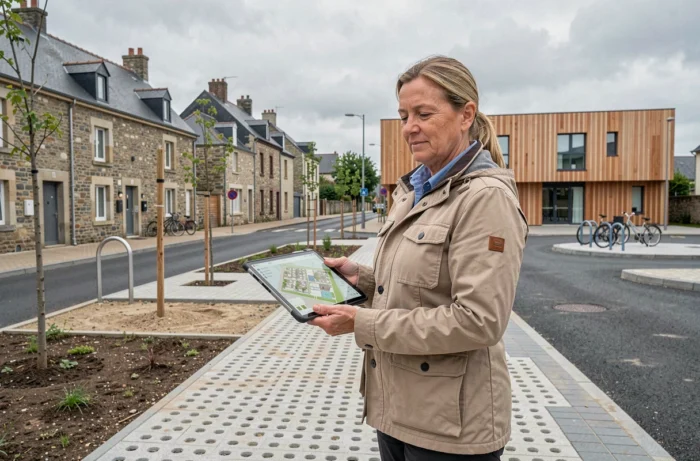
The Breton rental market is under double pressure. On one side, thermal sieves (labels F and G of the energy performance diagnosis) are gradually banned from rental. On the other, rental demand remains strong in cities like Rennes, Brest, or Vannes, driven by economic and academic attractiveness.
For an investor, renovating an old property to meet energy performance standards represents an initial cost but protects rental yield over time. A property rated A or B attracts tenants willing to pay a slightly higher rent because their energy costs decrease in return.
- Properties rated G have already been banned from rental since January 2025, and F will follow.
- Energy renovation aids (notably MaPrimeRénov’) remain available for landlord owners.
- A favorable energy performance diagnosis improves the property’s value at resale, in addition to securing its rental.
A sustainable rental investment in Brittany combines profitability and regulatory compliance. This is no longer a niche positioning: it is the minimum condition to remain in the market in the coming years.
The Breton real estate stock will undergo a profound transformation due to the combined effects of regulatory tightening, climate adaptation, and evolving occupant expectations. Properties that do not align with this trajectory will gradually lose attractiveness, whether for sale or rental.