When looking for accommodation in Normandy for a weekend or a week, the classic reflex remains to book a hotel or a gîte through a platform. However, one format that radically changes the experience of the stay is the guesthouse run by resident owners, offering homemade breakfast and local insights.
Guesthouses in Normandy: What the format really changes in daily life
In a hotel, you get a key, go up to your room, and leave in the morning. In a guesthouse, the owner lives on-site. The difference may seem trivial on paper, but it changes three concrete things.
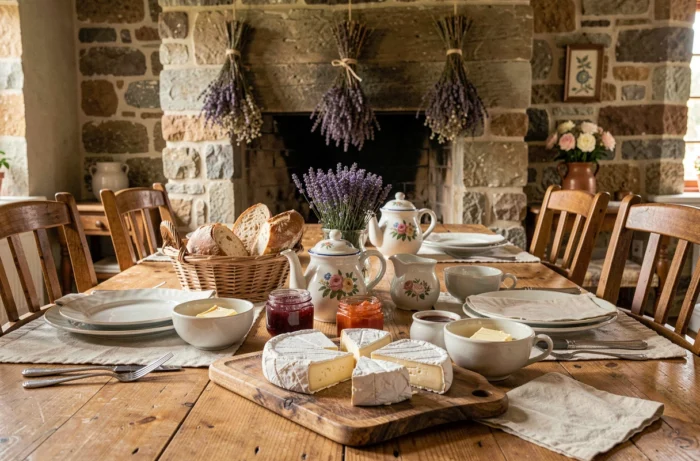
First, breakfast. We’re not talking about an industrial buffet but about local products selected by someone who knows the producers in the area. Homemade jams, bread from a village baker, farmhouse cider from the nearby press. Breakfast becomes an introduction to the Norman terroir.
Next, the recommendations. An owner who has lived in the Pays d’Auge or Cotentin for several years knows which trail to avoid after rain, which restaurant still serves authentic tripes à la mode de Caen, and which market is worth visiting on Saturday morning. This local filter does not exist on any app.
Finally, the pace. A guesthouse rarely accommodates more than five rooms (that’s the regulation). You share common spaces with a few travelers, not with an entire hallway of tourists. The address https://www.lamaisonmontigny.fr/ perfectly illustrates this human-sized hospitality model, rooted in a preserved Norman setting.
Car-free stay in Normandy: A trend that favors guesthouses
Normandy has recently developed an offer of stays accessible only by train, grouped under a “low-carbon Normandy” section on the Normandy Tourism website. This initiative is based on a strict set of criteria: rail accessibility, no car during the entire stay, and strictly local accommodations and activities.
This section surpassed 200,000 views in 2025, confirming a real demand. For guesthouses located near a train station, this is a structural advantage. Owners often offer shuttle services or lend bikes for short trips.
The rise in fuel prices reinforces this movement. Travelers who previously headed south are shortening their trips and rediscovering destinations accessible within a few hours from Paris or Rouen. Normandy attracts a local clientele looking for quality rather than distance.
Choosing your Norman guesthouse: The criteria that matter on the ground
Booking platforms display filters (price, location, rating). However, one often finds themselves disappointed because the criteria that make a difference are not those checked online.
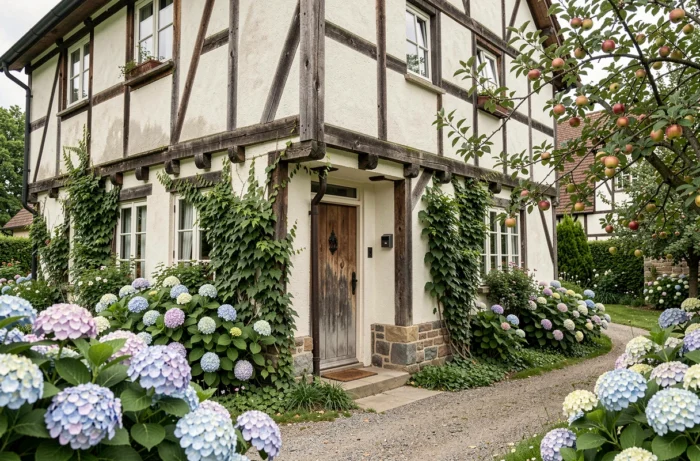
- The building and its history: a stone longhouse, a half-timbered manor, or a restored farm provide different atmospheres. In Normandy, the architectural heritage varies greatly between the Pays d’Auge, Bessin, and the Orne bocage. Check photos of the common areas, not just the room.
- The owner’s involvement in the guest table: some houses offer an evening meal made with garden or market products. Others limit themselves to breakfast. The guest table transforms accommodation into a gastronomic experience, especially when the owner cooks.
- The location in relation to points of interest: a guesthouse in the heart of the bocage is suitable for hiking and tranquility, but not for visiting the D-Day beaches without a car. Cross-reference the location with your actual desires to avoid disappointments.
- Detailed reviews rather than the overall rating: a 4.8 out of five says nothing about sound insulation or bedding quality. Reading recent comments on nighttime comfort remains the best indicator.
Normandy off-season: Why guesthouses make perfect sense in autumn and winter
Most articles about staying in Normandy target the summer. We forget that the region offers a different, often more authentic face between October and March.
Guesthouses heated by wood fires, with shared lounges and thick duvets, are designed for this season. You return from a walk on the cliffs of Étretat or along a sunken path in Cotentin, and find a lit fireplace. The comfort of a guesthouse is especially measured off-season.
Rates drop significantly in low season, making high-end addresses normally reserved for comfortable budgets accessible. Owners also have more time to dedicate to each traveler when the house is not fully booked.
Feedback varies on this point, but several regular travelers believe that Normandy in the autumn rain, with its low light and clear landscapes, offers a more memorable experience than in the height of summer.
Norman heritage and charming stay: A direct link
The built heritage of Normandy, from the manors of Perche to the farm-manors of Bessin, is in itself a reason to stay in a guesthouse. Sleeping in a carefully restored 17th-century building is nothing like a night in a hotel chain.
Some owners actively participate in the conservation of local heritage and open their archives or gardens to visitors. This link between accommodation and living heritage distinguishes Normandy from regions where guesthouses occupy recent constructions without historical anchoring.
A stay in a Norman guesthouse combines accommodation, local gastronomy, and heritage immersion in a format that neither hotels nor seasonal rentals can replicate. The next time you plan a weekend a few hours from Paris, this option deserves to be considered before any other.